




Long Days on the Mae Hong Son Loop: What They Really Feel Like
Tourism is long days stitched together by transport, timing, and who gets paid.
Principle: the longer the day, the more every small friction or unfair price compounds.
The Insight: Distance is also Economics
On the Mae Hong Son Loop, “long day” does not mean distance alone.
It means 762 curves between Chiang Mai and Pai. It means a rental contract written in small print. It means a driver from Mae Taeng doing three back-and-forths in peak season, because fuel prices rose but commissions did not.
Every extra hour on the road shifts money, risk, and control.
If you understand those shifts, the loop stops feeling random and starts to make sense.
The Principle: Incentives Shape Every Curve
Transport on the loop works like a series of small markets.
Bike rentals, songthaews, minivans, local guides, homestays. Each has a different way to earn, and a different level of power.
Rental shops earn more by turning bikes fast and avoiding damage.
Minivan operators earn by filling seats, not by improving comfort.
Guesthouses earn by stretching stays, sometimes nudging you to add “one more night” when public transport is thin.
So a simple choice — bus at 9:00, private car at 10:30, or scooter for three days — is also a choice about who carries the risk: you, or someone paid to do it.
The Local Reality: A Loop Built on Three Long Days
Most travelers break the Mae Hong Son Loop into three long segments.
Chiang Mai–Pai. Pai–Pang Mapha–Mae Hong Son. Then the run back via Khun Yuam and Mae Sariang. Each day is 4–7 hours in motion, depending on stops and season.
In November and December, the air is cool and the roads are crowded.
You smell grilled chicken and petrol around Pai’s bus station from 8:00 onwards, as minivans idle with open doors. Drivers call out destinations softly: “Chiang Mai, Pai, Mae Hong Son.” Seats fill, then overfill.
In June, the same station is quieter.
Rain hangs in the air and the pavement steams after short bursts. Drivers wait longer to fill a van. If only four people show up, departure times slide. You pay with your afternoon instead of your wallet.
Between Pai and Pang Mapha, the world tightens.
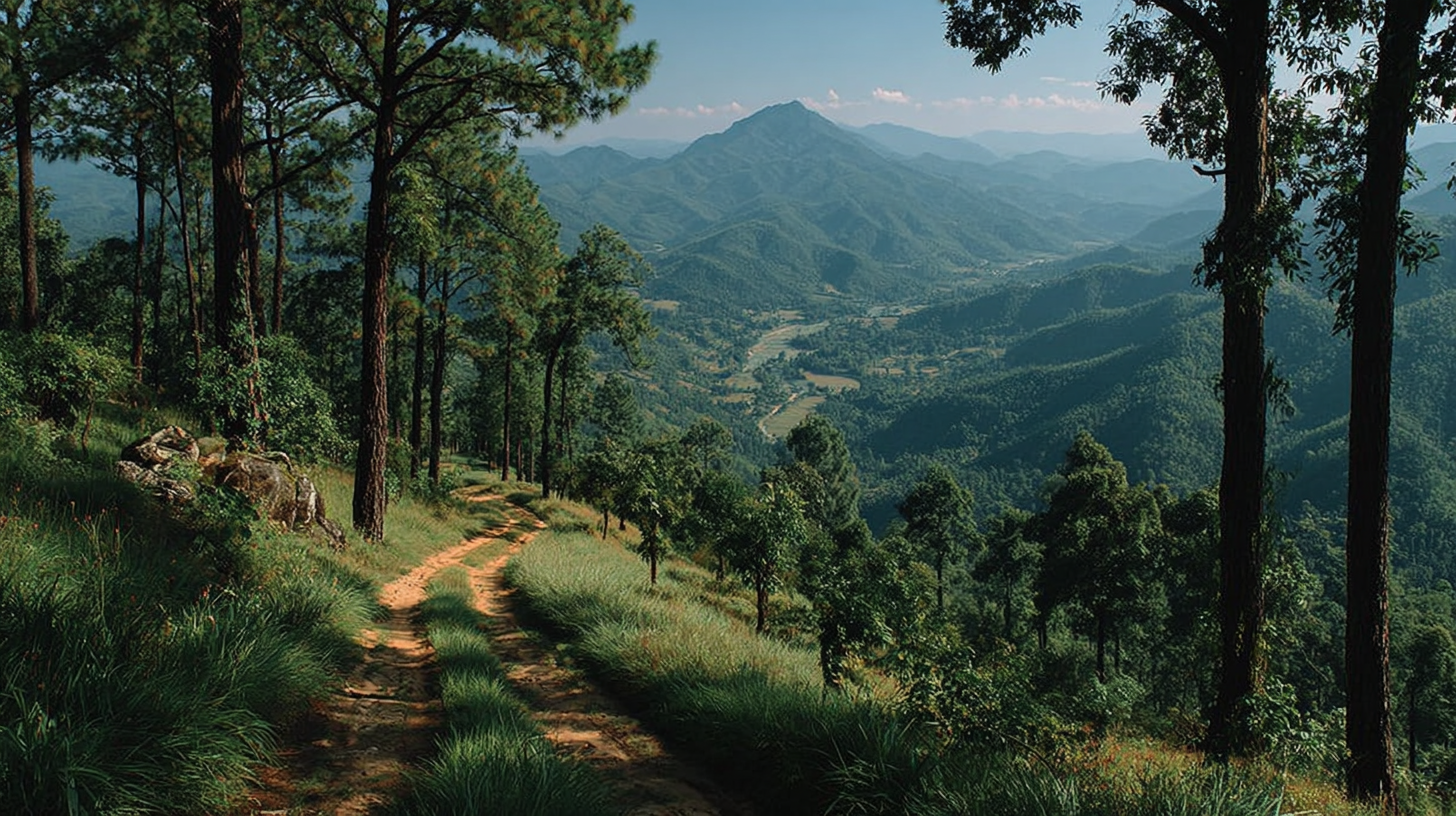
Fog settles low in the early morning. Road 1095 narrows and the edges crumble in places. You pass bamboo houses and small Shan restaurants with hand-painted signs. If a truck overturns or a landslide hits after heavy rain, the whole corridor pauses.
Here, long day means you can arrive at Tham Lod Cave right as the light fades.
You either pay for a private bamboo raft, or you accept that today you will not see the full chambers.
The Human Example: A Driver’s Math
“Full van is ten people,” Somchai tells me at Pai’s walking street, around 10 p.m.
He has driven the Chiang Mai–Pai route for twelve years. His minivan is parked just off the main street, nose pointing toward the dark road out of town.
“In high season, easy. Hostel sells ticket, ten people come. I get my fixed fee, they keep commission. Everyone happy,” he shrugs.
“In low season? Maybe four people. If I go with four, fuel plus maintenance,” he taps the side of the van, “I make almost nothing. If I wait to fill, tourists angry.”
He shows his phone. One booking app lists the ticket at 200 baht. The board at the station says 180. A hostel around the corner sells it for 250 with a free coffee. The route is the same. The economics are not.
“So what do you do?” I ask.
“Sometimes,” he smiles, “I drive for less money, to keep my place in the station system. Sometimes I call friends. We move people together.”
From the passenger seat, you feel only a delay or a cramped ride.
From his side, each decision is a trade-off between short-term fuel and long-term access to a route.
The System: How Long Days Get Built
Long days on the loop come from three overlapping systems: schedules, risk, and information.
Schedules are set to match peak demand, not individual comfort.
Minivans run when hostels can gather enough people. Public buses align with local market days and school runs, not with your sunrise plan in Pang Mapha. If you miss the 9:00 a.m. songthaew out of Mae Hong Son to a hill village, the next might be “maybe 1 p.m.” or “if enough people.”
Risk slides to whoever has the least negotiating power.
Self-rent a scooter from Chiang Mai, and the risk becomes yours: fog near Pang Mapha, oil patches in wet season, a dog crossing near Soppong at dusk. The rental shop’s main risk is paperwork and deposits. That is why deposits get strict in peak season, when crashes spike.
Book a private car, and risk shifts to the driver.
He must manage fatigue, pressure from guests who want “just one more stop,” and the temptation to drive faster on empty stretches near Mae Sariang. The price includes that hidden calculus.
Information is uneven.
Online forums make the loop sound like a rite of passage. They often underplay the air quality in March, when smoke from burning fields sits low over the valleys. They rarely mention that if you break down 40 km outside Mae Hong Son at 5 p.m., your options are a passing pickup truck, an expensive tow, or a long, slow wait.
OTAs contribute to this gap.
They highlight Chiang Mai and Pai transfers but skip Mae La Noi, Ban Rak Thai, or the small junctions where local songthaews turn off. A day that looks “booked” online can still involve two unplanned hours waiting on the roadside at Pang Mapha junction, with a noodle stall your only shelter.
A connective system — whether an app like Waykeeper or a local coordinator — tries to smooth these junctions.
By mapping real departure times, checking road conditions, and giving drivers clear, fair pay, it shortens your long day without shortening the actual distance.
It also shifts more value to local actors.
If a guide in Pang Mapha knows guests will arrive by 11:00, not “sometime morning,” he can plan a three-hour cave visit and a late lunch at his cousin’s shop. Predictability becomes income.
Closing Truth: Long days only feel fair when time, risk, and money move together.
Related blogs
Lorem ipsum dolor sit amet consectetur. Adipiscing eget risus tempus facilisis scelerisque vitae consectetur vitae. Amet faucibus venenatis donec mattis.



Pai District,
Mae Hong Son Province
58130, Thailand


