




Once Upon a Time Crossing into Shan State
The first crossing lives in the body
First crossings do not stay in maps, they stay in the body.
They return as a small shift in breath when you hear a certain road name.
Crossing into Shan State was not a border stamp, it was a slow exhale.
I felt it before I saw any sign, like the way the chest softens after holding a note too long.
A simple line, and how it rearranges attention
Borders look like straight lines on paper, but the body does not feel in straight lines.
It notices changes in pace, in how people stand, in how voices lower or rise.
The principle is simple, attention follows what feels slightly unfamiliar.
On that crossing, my attention shifted from the road to my own breathing, as if to check if I was arriving whole.
Approaching the soft edge of the map
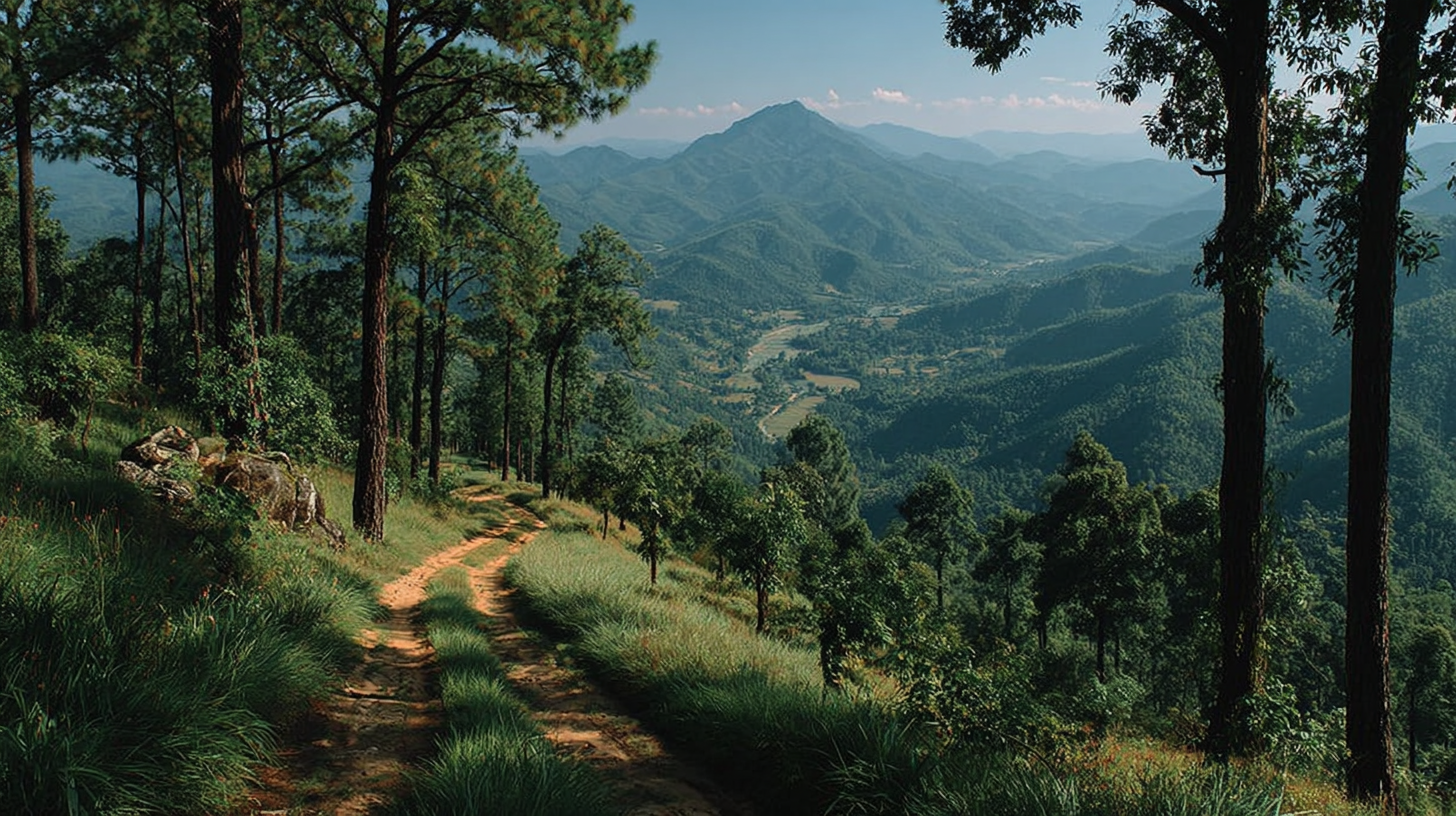
The road from Pang Mapha toward the small crossing ran through quiet bends.
Cool air moved across my arms, and the sky held a pale, even light.
I rode with a local guide from Ban Jabo, who had family on both sides.
He spoke little, saving breath on the uphill curves, the motorbike humming at a steady pitch.
The asphalt slowly turned rough, then broken in patches, then to dirt.
Each change asked for more balance from my body, more attention in my hands.
The presence of real people, not abstract borders
At the informal edge, there was no gate, only a cluster of small wooden houses.
Dogs lay under the shade of one big tree, lifting their heads when the engine stopped.
My guide greeted a woman in Shan, his shoulders relaxing as he stepped off the bike.
I watched his posture, softer here than in Mae Hong Son town, and noticed my own spine copy that easing.
Two men were drinking tea from enamel cups, eyes steady but not suspicious.
Their glance took in my backpack, my shoes, my hands, then they went back to their conversation.
A human moment, quiet and precise
A boy sat on the porch, swinging one leg, holding a cracked plastic toy truck.
He looked at me with the kind of open stare that children carry, curious but not performing.
Our guide handed him a small bag of sesame snacks, and the boy smiled without hurry.
He did not say thank you out loud, he simply shifted his weight closer, feet brushing the wooden floor.
I noticed my own breathing had become shallow on arrival.
Standing there, I let the inhale lengthen, counting to four without a sound, feeling my ribs move against the shirt.
How crossings teach attention, one breath at a time
Crossings like this do not announce themselves with flags or loudspeakers.
They move through the body in small signals, a tight jaw, a held tongue, a careful step.
My teacher in Pang Mapha once said that breath is the first passport.
If the breath is rushed, the mind treats every new place as a threat, even when it is not.
On that day, I could feel traces of stories I had heard about this border.
Military patrols, old conflict, warnings from relatives who told me to avoid risky roads.
But the local reality, that morning, was simple.
A woman washing dishes in a plastic basin, a kettle steaming softly, a faint smell of cooked rice hanging in the air.
The quiet patterns of local life
People moved with unhurried efficiency, as if the day had already decided its rhythm.
A motorcycle left with two sacks of rice tied at the back, dust spreading lightly behind.
My guide sat on a small stool, shoulders rounded, speaking about weather and harvest, not politics.
He switched between Northern Thai and Shan with no visible effort, like natural breath changing speed.
No one spoke about the official side of the border that day.
They spoke about a cousin who had moved to Chiang Mai, and a monk who had fallen ill across the line.
The Waykeeper attention, inside and outside
This is the quiet place where Waykeeper lives for me, between map and heartbeat.
A route is not just a line from Mae Hong Son province into Shan State, it is also a pattern of trust in the body.
Local guides here carry more than knowledge of paths.
They carry the small social agreements that keep a visitor safe and respectful, even when no signboard explains the rules.
When we build routes, I think back to that roadside porch.
To the boy with the toy truck, the invisible tension in my shoulders, the relief when someone who belonged here laughed.
Presence as the only passport that keeps working
On the ride back, the road felt slightly different, even though nothing visible had changed.
I knew the turns now, and my breathing matched the engine, steady in and out.
The border did not disappear, but its weight inside me shifted.
It felt less like an abstract danger, and more like a place that requires careful listening.
Attention, I realized, is what keeps crossings honest.
Not brave words, not big plans, just noticing when your breath shortens and softening it, one inhale at a time.
Closing truth
Some lines on the map are very real, but panic is optional.
Breath that stays honest makes every crossing, on any road, a little more human.
In the end, the body remembers how you arrived more than where.
Presence is the only border stamp that follows you home.
Related blogs
Lorem ipsum dolor sit amet consectetur. Adipiscing eget risus tempus facilisis scelerisque vitae consectetur vitae. Amet faucibus venenatis donec mattis.


Pai District,
Mae Hong Son Province
58130, Thailand


