



The Last Mile Problem: Why Transport Quietly Decides Your Trip
The Insight
Transport is the skeleton; everything else in travel hangs off its bones.
If you cannot move simply and reliably, nothing upstream or downstream really works.
Waykeeper’s core mechanism is simple: map real last-mile friction, then route around it.
The Principle
The last mile decides whether a great plan becomes a lived day or a cancelled tab.
Energy, time, and attention are finite, so transport failures compound faster than any other error.
Physics is blunt about it: drag, slope, distance, and time do not care about your booking.
In economics, the most expensive cost is failed coordination; in travel that is always transport.
When a songthaew does not come, every downstream promise homestay, trail, workshop collapses together.
The inverse is also true: a reliable truck at the right bend can rescue a whole region’s access.
The Architecture
Think of travel as a stack: discovery, decision, booking, movement, experience, memory.
The last mile sits as a narrow neck between “booking” and “experience,” throttling everything above it.
Large platforms optimize the top layers because they are easy to digitize and monetize.
The bottom layers roads, riders, boats, weather stay opaque, so failure gets blamed on “the destination.”
A Northern Thailand routing system must treat a flagged pickup spot like a database index, not an afterthought.
Each landmark, village shop, or house shrine becomes a stable anchor in a non-standard address space.
On the ground, this looks like “turn left at Pa Noi’s noodle stall” encoded as vectors, not prose.
Motorbike riders, farm trucks, red trucks, and boatmen become dynamic edges in a living transport graph.
AI agents can propose sequences bike, walk, songthaew but only if the graph respects real gradients and fuel.
The architecture fails if it treats a washed-out track and a paved road as equivalent fields in a form.
The Local Constraint
Northern Thailand does not have a last-mile problem in theory; it has many in practice.
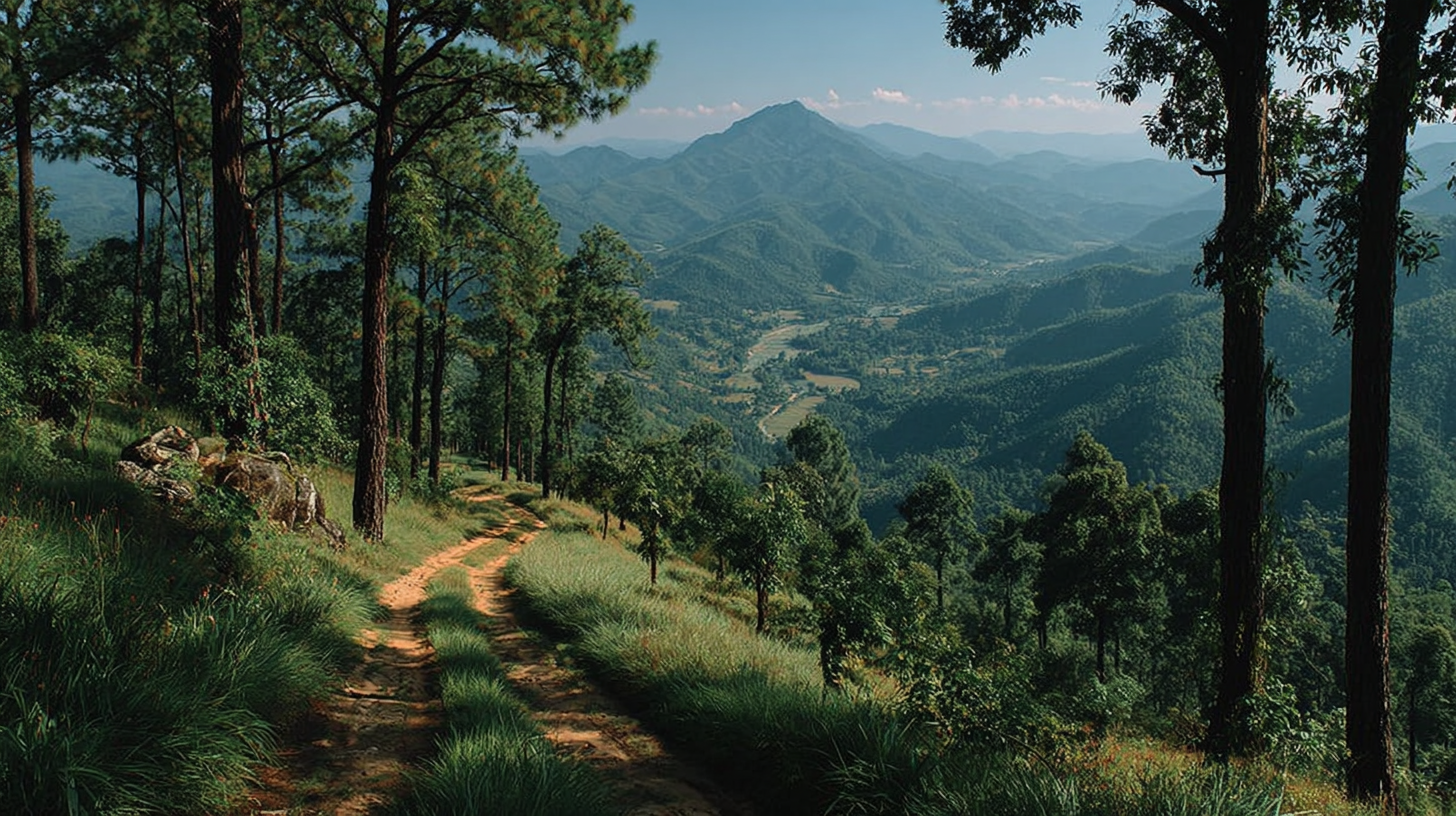
Dry season dust, rainy season landslides, burned fields, and fog each redraw the map without warning.
A track from Mae Chaem to a small Karen village may be easy at 7 a.m. and lethal at 5 p.m.
Light angle, rain run-off, and one overturned truck can turn 40 minutes into three hours.
Songthaews in Chiang Rai town will happily cross districts, but may refuse one extra steep lane.
Not because they are unkind, but because brake fade, fuel, and night fog make the risk math bad.
Some Hmong villages north of Chiang Dao align their market days with the one reliable pickup route.
Travelers who ignore this schedule discover that “no car today” is not a negotiation, it is physics plus economics.
On back roads near Nan, Google Maps may show a “shortcut” that is actually a logging track.
Local riders know this track turns to clay in rain; a database that ignores them will strand people.
The Field Move
When I scout new areas on the motorbike, I log not just the route, but the edges of failure.
Where did the asphalt end, where did the gravel deepen, where did my rear tire first slip under load.
I stop in small shops and ask simple questions: “Which truck goes up there when it rains?”
The answers are often names, not companies: one uncle, one nephew, one woman with a trusted pickup.
These names map to nodes with low capacity but very high reliability in specific conditions.
This is not gig work; it is embedded obligation: family, temple, school, and farm runs first.
Waykeeper’s system design treats these realities as constraints, not bugs.
A route suggestion that competes with school runs is marked fragile; one that rides after them is marked strong.
Drones and cameras help verify whether bridges are intact, but one farmer’s comment often beats satellite lag.
So the architecture must merge sensor data, satellite views, and the shop-owner’s sentence into one coherent map.
In Pai’s backside hills, I have turned around because cows occupied the only narrow ridge line.
That single fact herd flow at 4 p.m. is as critical as any fancy ETA model.
The Local Constraint
Terrain compresses theory into hard edges, and Northern Thailand is full of such edges.
Steep gradients force engine choices; a 110cc scooter with two backpacks is a different system from a 250cc dual-sport.
Village time also runs on a different clock from city assumption.
When a guide in Mae Salong says “we go after tea,” that might be a 90-minute window, not a fixed slot.
Economic incentives shape routes quietly; a driver will choose a detour if lychee buyers pay more that day.
This means any fixed schedule that ignores harvest periods will break in May and seem fine in January.
Social structure shapes access as strongly as altitude.
A Lahu village might trust only a specific driver to bring outsiders to a funeral or ritual space.
An outsider system that floods such a driver with random bookings damages trust faster than it creates value.
So scalable design here is not “more rides”; it is “right rides, at right times, with right people.”
The Field Move
End-to-end design must start from the last ten meters, not the first banner click.
Ask first: how does a traveler physically step from road to homestay door without confusion or shame.
In Ban Rak Thai, this might mean mapping the exact pier where a simple boat can land when water is low.
In Mae Kampong, it means marking which alleys are respectful to walk with luggage during evening prayers.
The stack then builds upward: stable pickup points, realistic vehicles, verified timing, and only then “experiences.”
AI agents can help by simulating paths: if the pickup is missed, what is the next safe move, not just the next cheap move.
One principle I use in the field is “never hide a slope behind a photo.”
Every steep access, every river crossing, every night ride risk should be visible at planning time, not discovered in panic.
This honesty filters out mismatched travelers early, which protects both guides and villages.
Design that over-promises on access extracts value once, then kills trust for years.
The Closing Truth
In the end, travel is not defined by where you booked, but by how you moved.
The last mile is not the end of the journey; it is the moment the map becomes real.

Related blogs
Lorem ipsum dolor sit amet consectetur. Adipiscing eget risus tempus facilisis scelerisque vitae consectetur vitae. Amet faucibus venenatis donec mattis.



Pai District,
Mae Hong Son Province
58130, Thailand


