




Transport Reliability in Northern Thailand: How It Actually Works
The Insight
Transport reliability is not about vehicles, it is about incentives.
When a route pays better when it is late or crowded, it will be late or crowded.
The Principle: Reliability Is a Contract, Not a Schedule
At its core, reliability is an informal contract between three parties.
The operator, the passenger, and the coordinating authority each carry part of the risk, and the one who carries the risk demands a premium.
How Risk Gets Priced in Northern Thailand
In Northern Thailand, risk usually gets pushed to the passenger.
Buses and songthaews often wait until they are full, so time uncertainty sits on the traveler, not the operator.
On the Chiang Mai to Pai route, minivans leave "around" each hour, not exactly at it.
The operator earns more if they delay departure to add two or three last-minute seats, so departure time becomes elastic.
At the Arcade Bus Terminal, you can see the pattern in seating charts.
Companies accept prebooked seats, then leave gaps for walk-up passengers who pay cash, so timetables are approximate signals, not commitments.
In rural districts like Mae Chaem or Chom Thong, songthaews often do one or two trips per day.
If they leave half-empty, they lose money, so they wait, and every passenger quietly subsidizes vehicle utilization with their time.
This is a simple equation: low fares plus volatile demand equal low schedule precision.
If the operator cannot raise fares, they will instead earn by stretching time and capacity.
When Weather and Terrain Enter the Equation
Northern routes pass through mountains, landslide zones, and fog-prone passes.
When risk of delay from weather increases, operators protect themselves by widening departure windows or skipping underfilled trips.
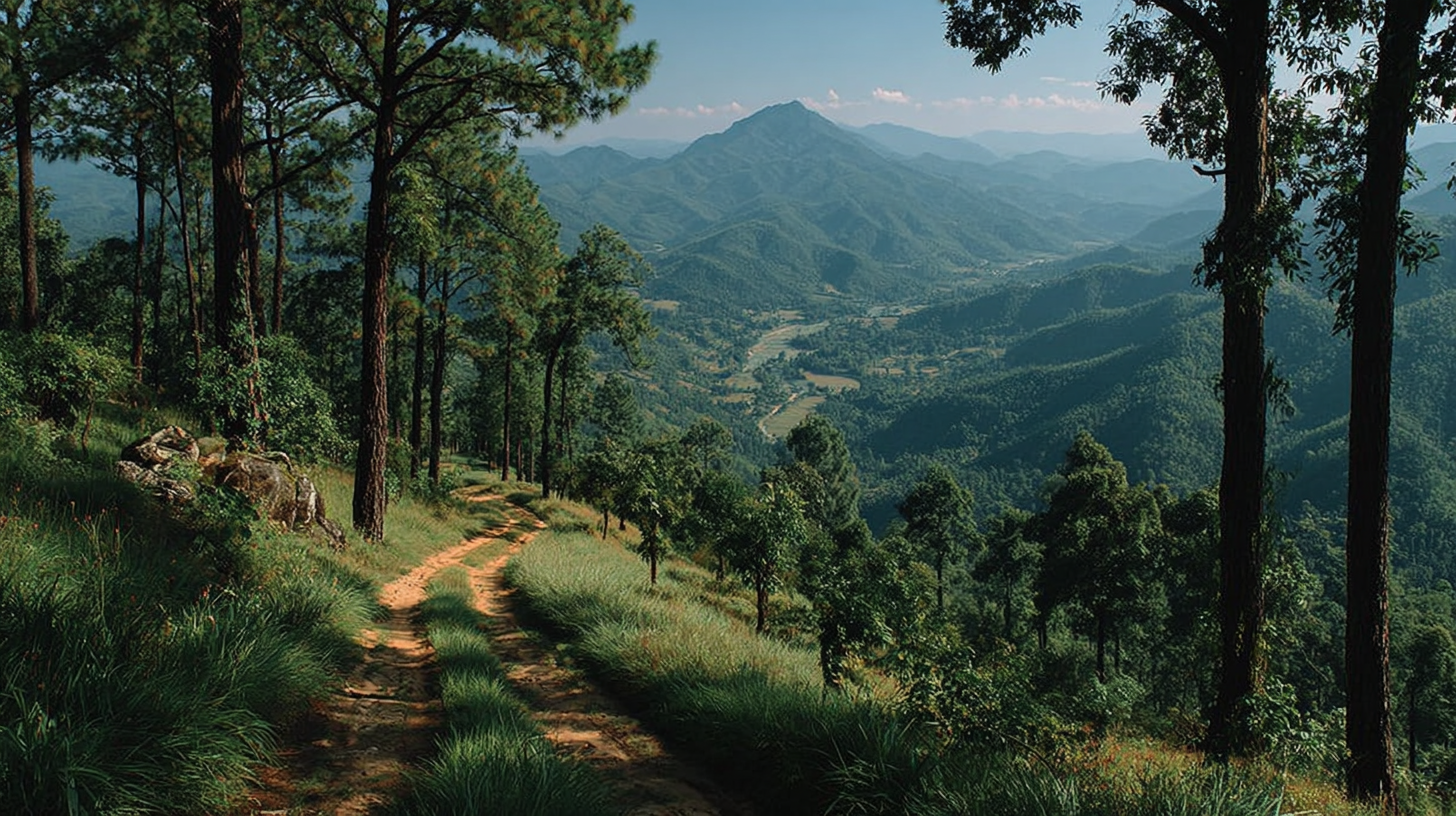
The Pai road has 700 plus curves and frequent roadworks.
A formal schedule on paper might say 3 hours, but drivers build private buffers, then compress them by speeding if they are behind.
On routes to remote villages, heavy rain can cut speeds by half.
Because fares are fixed by route, not by delay, every extra hour of driving is unpaid, so some drivers simply do not run marginal trips in bad weather.
Weather uncertainty, combined with fixed pricing, encourages operators to run only the most profitable departures.
This is why the last return ride from a village often becomes a rumor, not a guarantee.
When nature controls travel time, humans control departure time to protect income.
Shared Vehicles, Shared Uncertainty
Collective transport in Northern Thailand runs on batching.
Passengers are not buying a seat at a time, they are buying a slice of a full vehicle.
Chiang Mai city songthaews circle routes only when enough people flag them or call the number.
The incentive is to keep moving on busy stretches and ignore thin segments, so predictability tracks density, not need.
Up to Doi Suthep or Doi Pui, drivers wait at the base until enough hikers gather.
The mountain road cost, fuel plus wear, does not change with one or eight passengers, so they wait for eight.
Batching lowers cash fares, but increases time volatility.
This tradeoff is rational for students and workers who know the pattern, but expensive for visitors who misprice their own time.
Informal Guarantees and Social Reputation
Where formal schedules are weak, social reputation becomes the main coordination tool.
Regulars remember which drivers leave close to on time, and those drivers attract commuters who value reliability over a small price difference.
At local stands in Chang Phueak or San Sai, people ask "Which driver is fast but safe?"
Names circulate, and that quiet ranking system pressures some operators to maintain basic consistency.
In villages like Ban Mae Klang Luang near Doi Inthanon, transport is often negotiated through homestay hosts.
If a host promises a pickup at 3 pm and the driver shows at 4:30, the host pays with future bookings, so they lean on drivers more than an individual tourist can.
These social contracts create pockets of reliability, but only where relationships repeat.
One-off tourist journeys sit outside these loops, so they experience the raw volatility of the system.
Price Transparency and Hidden Costs
A 150 baht ride that leaves you waiting 90 minutes is not cheap.
The system shifts cost from baht to hours, but most boards and apps only show baht.
In Chiang Mai, a Grab car might cost double a songthaew for some routes.
Yet if you value your time at even 200 baht per hour, a 30 minute wait already cancels the saving.
Hidden costs also include missed connections, late hotel check-ins, and daylight lost on mountain roads.
Tour operators that bundle private transfer and timing certainty charge a premium, but that premium is mostly a reliability fee, not a comfort fee.
Routes create realities, but pricing rules decide whose time matters.
How Guides and Communities Adapt
Local guides adapt by becoming informal schedulers.
They know which songthaew lines are likely to leave before 9, and which drivers will detour for them.
In Mae Taeng or Samoeng, many trekking guides insist on chartered pickups.
They pay a higher fixed rate so that guests arrive at trailheads before the heat and return before dark, because missed light has safety implications.
Community groups sometimes organize "first trip guarantees" on critical routes, for markets or schools.
Subsidies, small or informal, cover the risk of low passenger counts, and in return the driver commits to leaving at a strict time.
These experiments show that reliability improves when someone pays directly for departure certainty.
Where no one pays, reliability stays an unfunded expectation.
The Waykeeper Angle: Mapping the Incentives, Not Just the Routes
A platform that cares about real reliability must describe incentives, not just timetables.
This means telling travelers "this route usually waits to fill" or "this driver leaves on time even half full," instead of pretending all departures are equal.
Waykeeper can encode local knowledge that residents already use.
Guide notes like "catch the 7:30 yellow truck or wait until 9:30" translate lived heuristics into explicit planning information.
Clear mapping of risk lets people choose their own tradeoff between time and money.
Some will pick the cheap, uncertain option, others will pay for reliability, but both will do it knowingly.
When information about behavior becomes transparent, incentives tend to shift.
Operators who are consistently late may lose the most time-sensitive riders, while those who are predictable gain them, and revenue follows reliability.
Universal Patterns Beneath Local Roads
Transport reliability in Northern Thailand is a local expression of a broad rule.
When systems cannot charge fairly for reliability, they quietly charge in waiting time instead.
The pattern appears in buses, in hospital queues, and in visa offices.
Where information is thin and demand spikes unpredictably, people pay with patience rather than cash.
Two principles emerge from these hills and roads.
Routes create realities, and whoever bears the uncertainty shapes how those realities feel.
The second principle sits underneath every missed minivan and every punctual village truck.
What a system treats as "free" time, it will consume without limit.

Related blogs
Lorem ipsum dolor sit amet consectetur. Adipiscing eget risus tempus facilisis scelerisque vitae consectetur vitae. Amet faucibus venenatis donec mattis.



Pai District,
Mae Hong Son Province
58130, Thailand


