






Why We Need Waykeeper: Systems That Connect, Not Trap
The Insight
Trails teach faster than dashboards.
Waykeeper exists because the current tourism stack treats movement like a funnel, not a living system.
Reduction: We route people, trust, and baht through local networks instead of commission funnels.
The Principle
The core principle is simple: systems should increase freedom for every node, not trap any of them.
In control theory, a good feedback loop stabilizes the whole system, not just the output reading; OTAs optimize booking output while destabilizing guides, villages, and even seasons.
When 15–25% commission leaves a Mae Hong Son guesthouse for a foreign OTA, the system turns extractive, not regenerative.
The Architecture
Waykeeper is designed like a good mountain road: clear mainline, many safe exits, no black boxes.
At the top layer, we handle inspiration and discovery for real routes, not just city names: Chiang Mai to Pang Mapha to Nan with actual guides, CBT villages, and last‑mile drivers in the graph.
Under that, we run an availability and trust layer: verified hosts, CBT committees, drivers, wellness providers, all with transparent rules instead of opaque ranking algorithms that reward whoever pays more.
The transaction layer is built like a managed marketplace for rough terrain: direct payouts to local operators, predictable margins, multi‑party splits for CBT models, and support for capped volume when a village says “40 visitors a day, not 400.”
Then there’s the intelligence layer, which is not a recommendation toy; it optimizes for system health: smoothing seasonality, routing demand into Green Season, and balancing loads between famous and secondary destinations.
If you model northern Thailand’s 39.48 million visitors as current in an electrical grid, Waykeeper is a new routing board that sends that current into Nan, Pang Mapha, and Bo Suak without overloading Chiang Mai Old City.
The Local Constraint
Every design decision hits hard constraints the road will not negotiate with: geography, weather, culture, and money flows.
The data is blunt: 45% of tourists hit Peak Season, Green Season is underused, and yet places like Nan grow revenue +973% while still staying almost invisible in OTA search results.
On the ground, the transport gap is not theory: from Chiang Mai to Pang Mapha you either ride a motorbike through 1,864 curves, or you gamble on two‑row trucks with no schedule, no booking, and no safety guarantee.
CBT villages like Chulabhorn Pattana 9 and Nong San already solved social architecture—governance, revenue sharing, capacity limits—but they are offline to the world, floating as “dead ends” after a TripAdvisor mention.
Meanwhile, OTAs skim high‑yield city stays (foreign tourists spending ~120 USD/day in the North) and ignore the messy edges where last‑mile logistics and community politics live, because those don’t scale under their model.
Any system that pretends these friction points are “details” is a trap disguised as convenience; riders know this feeling when Google Maps draws a straight line through a washed‑out dirt road.
The Local Constraint
For Thai domestic travelers, who are 88% of the market volume, the main friction is not lack of interest; it is messy coordination, unclear quality, and fragmented booking across Facebook, Line groups, and phone calls.
For CBT and rural hosts, the friction is reversed: they fear losing control, underpricing themselves, or breaking village rules if they plug into a platform that pushes volume without understanding carrying capacity.
Seasonality is another hard constraint: when almost half the region’s visitors arrive Nov–Feb, that means Green Season cashflow drops while the forest is actually at its best, and guides sit idle or leave the trade.
Air quality in March–April adds another variable; an honest system must sometimes tell travelers “avoid this valley now, route to a coastal or alternative northern area,” even if that means less short‑term revenue.
Logistics numbers confirm the structural hole: 79.7% of Thai freight runs on roads, 91.6% of total network is road infrastructure, yet there is almost no structured, bookable last‑mile layer for rural tourism.
Waykeeper’s architecture starts by admitting these are not bugs; they are the load‑bearing beams the system must be designed around.
The Field Move
On the field, you don’t design from PPT, you design from missed buses and wrong turns.
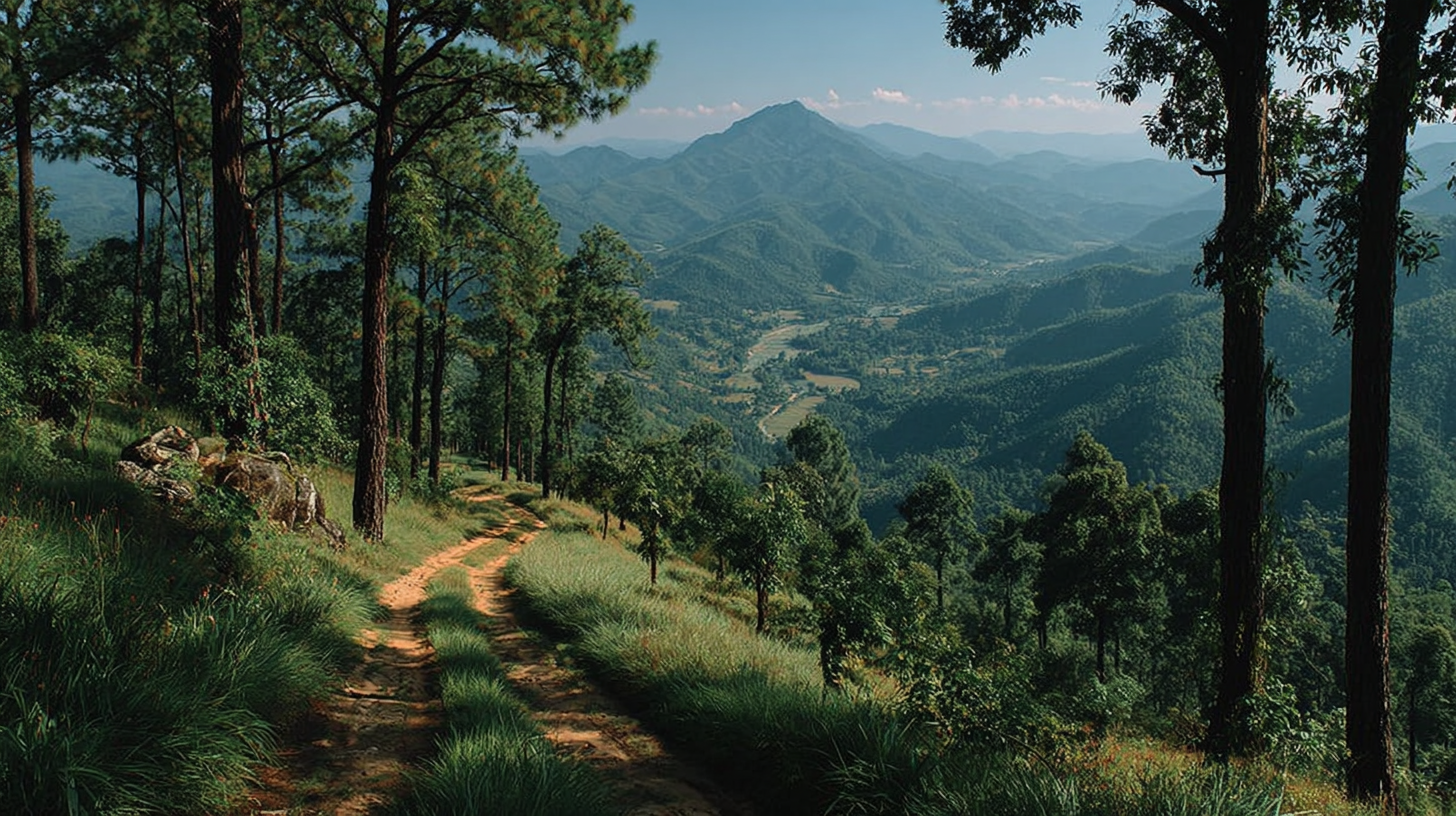
Ride from Chiang Mai to Mae Hong Son loop during Green Season and you see empty homestays in Pai, silent village guesthouses in Pang Mapha, and CBT committees that would host more if they could screen, schedule, and get paid reliably.
The first move is to map real operators and constraints as a graph: which village can take how many visitors per week, who has pickup trucks for Tham Lod cave, which Nan homestays align with Green Destinations standards, which drivers can safely run mountain passes at night.
Then build tools that slot into their existing behavior instead of replacing it: a host toolkit for CBT committees, adjustable capacity sliders, transparent revenue split dashboards, and offline‑friendly interfaces for areas with weak signal.
For transports, the move is a hybrid network: a core of vetted drivers plus a flexible ring of local vehicles, all coordinated by a routing engine that understands weather, road closures, and community rules, not just ETA.
For demand, the move is to stop chasing generic “more tourists” and instead match specific segments—digital nomads on DTV visas, wellness travelers, eco‑tourists—to specific windows like Green Season and secondary provinces like Nan, Phayao, and Chiang Rai’s rural zones.
The Field Move
This is also where AI becomes a tool, not a gimmick; generative systems help assemble real itineraries that obey constraints rather than selling fantasy packages with impossible sequencing.
If 300 million domestic trips form Thailand’s SAM, the model’s job is to surface realistic “work‑from‑Lanna” Green Season plays—Chiang Mai coworking to Pai to Ban Cha Bo, with verified Wi‑Fi, rainfall patterns, and transport in one flow.
For wellness tourism, which is compounding at around 13% and already 20% of tourism revenue, the move is to port the logic of places like Chiva‑Som or Kamalaya into micro‑scale village offerings: detox programs in Nan homestays, low‑carbon retreats tied into local agriculture, booked with clear quality bars.
This requires a quality verification system that behaves like engineering QA: clear test cases, not vague vibes—air quality data, waste handling, community consent, guest feedback loops, and maximum throughput numbers per stay.
Every itinerary Waykeeper ships should behave like a tested circuit: safe tolerances, known failure modes, and no single point of catastrophic overload on any village, guide, or season.
That’s how you avoid turning Bo Suak or Ban Cha Bo into the next overtouristed hotspot while still giving them the share of the 46.77 billion baht type growth we already see in Chiang Rai.
The Closing Truth
Once you see tourism as a living system, you stop designing traps and start designing flow.
The road teaches this every time: any line that ignores the terrain will eventually break.

Related blogs
Lorem ipsum dolor sit amet consectetur. Adipiscing eget risus tempus facilisis scelerisque vitae consectetur vitae. Amet faucibus venenatis donec mattis.



Pai District,
Mae Hong Son Province
58130, Thailand


