



Why We Need Waykeeper: Travel Systems That Connect, Not Trap
Trails teach faster than guidebooks.
Systems do the same for cultures.
At scale, tourism is not about places, it is about routing.
Who controls routing, controls which villages live, and which slowly empty out.
Most platforms optimize for capture.
They trap human flows the same way a dam traps water.
In physics, every constraint shapes a path.
A river does not choose its curve, the rock and slope do.
Tourism infrastructure is that rock.
Road placement, bus stations, OTA rankings, and visa rules bend movement like gravity.
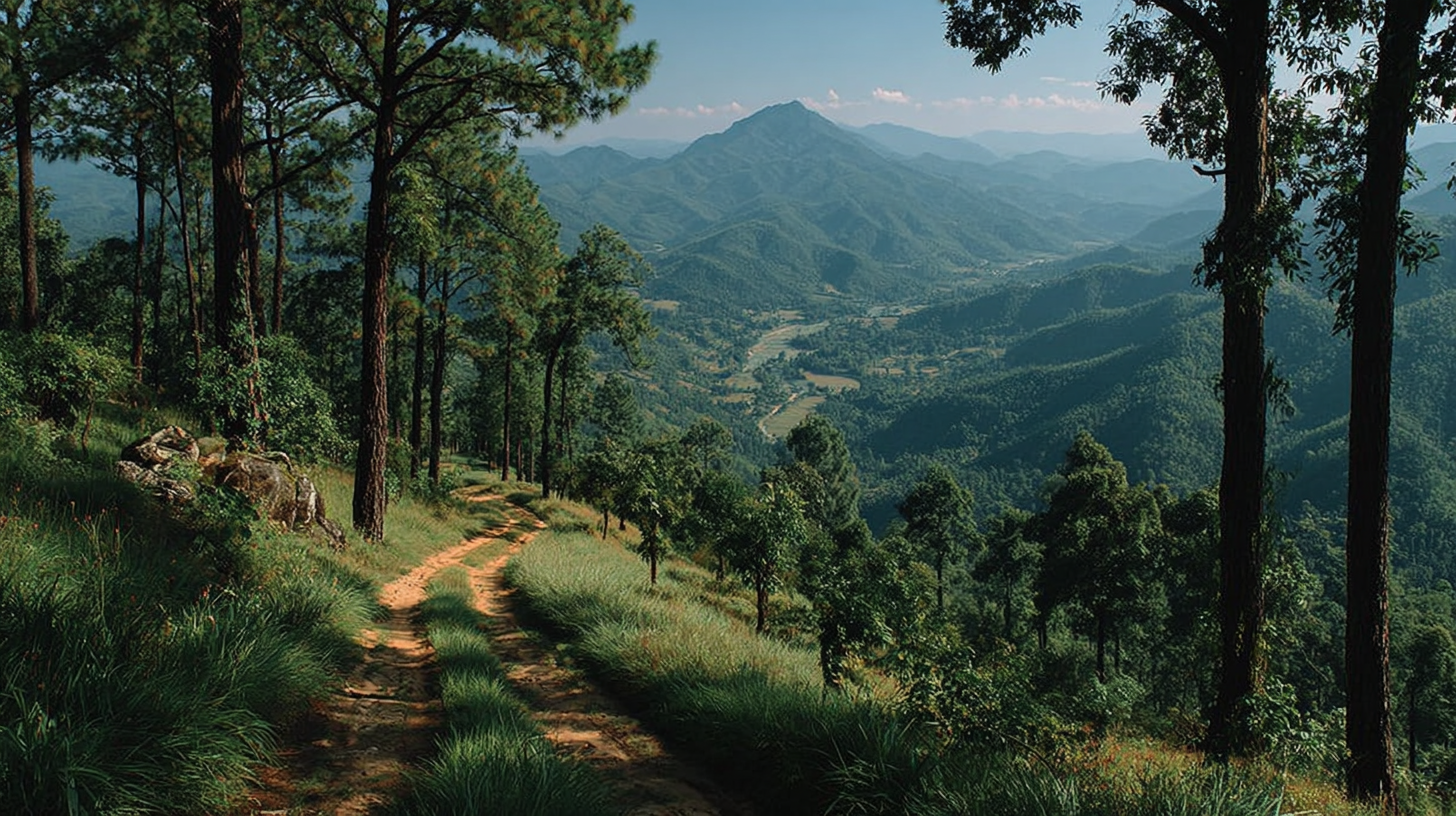
In Northern Thailand, you see this on a single highway.
Route 107 pulls people straight from Chiang Mai to Pai, then out again.
Villages five kilometers off that line stay invisible.
Their guides wait at home, while city tours keep importing staff from elsewhere.
The global booking platforms treat this like a feature, not a bug.
They centralize demand on a few "proven" spots, then monetize scarcity.
It looks efficient on a spreadsheet, like a factory running at full load.
On the ground, it feels like empty guesthouses next to overloaded waterfalls.
Economics has a simple rule.
If discovery is expensive, aggregation becomes power.
Right now, discovery in the North is very expensive.
It takes language skills, time, local trust, and repeated failures on bad roads.
So the OTAs aggregate, then sell that central position back to guides as commission.
The system slowly traps both sides, travelers and locals, inside its funnels.
A trap is any system where your best short term move hurts your long term options.
That is how addiction works, and how most "growth hacks" work.
For a small guide near Mae Chaem, listing only on one big platform is rational.
It brings bookings today, while quietly erasing their independent reputation tomorrow.
For a traveler landing in Chiang Mai, following the top-10 lists is rational.
It lowers risk today, while narrowing their sense of what the North could be.
You get a local maximum.
Like an evolutionary niche where one species dominates, but the ecosystem grows fragile.
One landslide on Highway 1095, and the whole Pai funnel stalls.
A single algorithm tweak, and a decade-old trekking shop disappears from search.
Waykeeper exists because the current routing logic is fragile and extractive.
Not evil, just misaligned with long term community resilience.
The core insight is simple.
If routing is controlled far away from the mountain, local feedback never shapes the path.
In good systems, feedback is fast and local.
Like how a rider adjusts balance on a dirt road within a fraction of a second.
I think about this while riding from Chiang Dao to Arunothai.
Google Maps shows a blue line, but the locals point to a different shortcut.
The map optimizes for cars and pavement.
The villagers optimize for weather, mud, and where the mechanic actually lives.
A living routing system should behave more like that village network.
It should listen to guides, homestays, and drivers who feel the terrain each day.
Technology likes to centralize.
Servers, models, data, all pile up in a few places.
But nature likes redundancy.
Many small paths, many small failures, no single point that breaks everything.
Waykeeper has to sit between these two logics.
Use central compute, but avoid central choke points.
So the architecture starts with a question.
How do we route trust and attention without routing power into one silo?
One approach is to treat each guide or host like a node, not a listing.
They own their identity, history, and relationships, and we only help surface them.
Instead of a ranking black box, think of a map of constraints.
Weather, road quality, group size, culture fit, season, and community rules.
Physics again.
Constraints define possible trajectories, then a small nudge selects one path.
Our AI agents act like that small nudge.
They search through options that respect constraints, then propose a few viable paths.
The key is what they are not allowed to optimize for.
Not for highest commission, not for pushing users into proprietary channels.
They optimize for fit with the human and fit with the place.
Those are fuzzy variables, but in field reality they matter more than star ratings.
In Mae Kampong, a 6-person group is fine.
In a tiny Hmong village near Phrao, three guests already stretch hosting comfort.
Most platforms ignore that boundary until someone complains.
Then they add a checkbox and call it solved.
Real constraints feel different when you talk to people face to face.
A village head might say, "Two nights per week for visitors is our limit."
The system has to encode that as a hard rule, not a suggestion.
Weather can be negotiated, community thresholds cannot.
When I design flows, I picture specific roads.
The steep concrete climb to Ban Khun Pae, the loose gravel into Sopkai, the fog on Doi Ang Khang.
Each road has a risk profile and a fatigue cost.
Each guide has a tolerance and a vehicle.
In a trapping system, these details are noise.
Everything gets compressed into "half day," "full day," or "3-star difficulty."
In a connecting system, these details are the data.
They shape who should go where, when, and with whom.
A good architecture respects energy budgets.
Traveler energy, guide energy, and community patience are all finite resources.
Economics again, but applied locally.
If we burn a village's patience too fast, no price later can buy it back.
So we design for rotation and rest.
Spread visits across clusters, leave gaps, listen to local signals.
This is not romantic, it is actuarial.
Like managing soil health, you track extraction and regeneration over seasons.
Some days, the right move is to send people back to the city.
The mountain is tired, or the forest is healing after fire control.
That is where AI helps, because it does not get bored of context.
It can remember burn history, festival dates, and monsoon onset patterns better than a tired agent.
But the decisions about values cannot be delegated.
What counts as "too much" must come from the communities along the route.
So the system has to be conversational, not prescriptive.
Agents propose, humans accept, adjust, or veto.
This shifts the platform role from gatekeeper to coordinator.
Less like a mall, more like a local switchboard with better tools.
It also shifts incentives.
If we do not tax each transaction heavily, we are less tempted to inflate volume at all cost.
Waykeeper survives when the region stays interesting and healthy.
That is a different survival game than extracting maximal commission per head.
In evolution, systems that overexploit their niche collapse or get invaded.
In tourism, they simply burn out places until travelers chase the next untouched spot.
A connecting system tries to slow that chase.
Not by hiding places, but by matching flows to real carrying capacity.
I keep a simple test in mind.
If a road closes for a month, do the people along it still trust us.
Trust is not about sentiment, it is about predictable behavior under stress.
Who shows up with accurate updates, who cancels fairly, who disappears.
The sharp principle is this.
Systems that respect constraints create more freedom than systems that ignore them.
Waykeeper only makes sense if it helps people see and act on real constraints.
Everything else is just another booking form with better graphics.
So "connect, not trap" is not a slogan, it is a system choice.
Design for local feedback and finite patience, or the mountains will teach you the hard way.
Related blogs
Lorem ipsum dolor sit amet consectetur. Adipiscing eget risus tempus facilisis scelerisque vitae consectetur vitae. Amet faucibus venenatis donec mattis.



Pai District,
Mae Hong Son Province
58130, Thailand


