The short answer
The Loop is legendary for a reason. 1,864 curves over 600km of mountain roads. It takes you through Pai, Mae Hong Son, Pang Mapha, and back. But it is not a casual scooter day trip — and the best version of this journey is the one that matches your confidence, time, and travel style.
If you are researching the Mae Hong Son Loop, you are probably trying to answer a few very practical questions before committing to it:
- What exactly is the route?
- Is it worth doing if you are not a confident rider?
- Can you visit Pai and the wider Mae Hong Son region without self-driving?
- When is the best time to go?
- Which stops are genuinely worth your time?
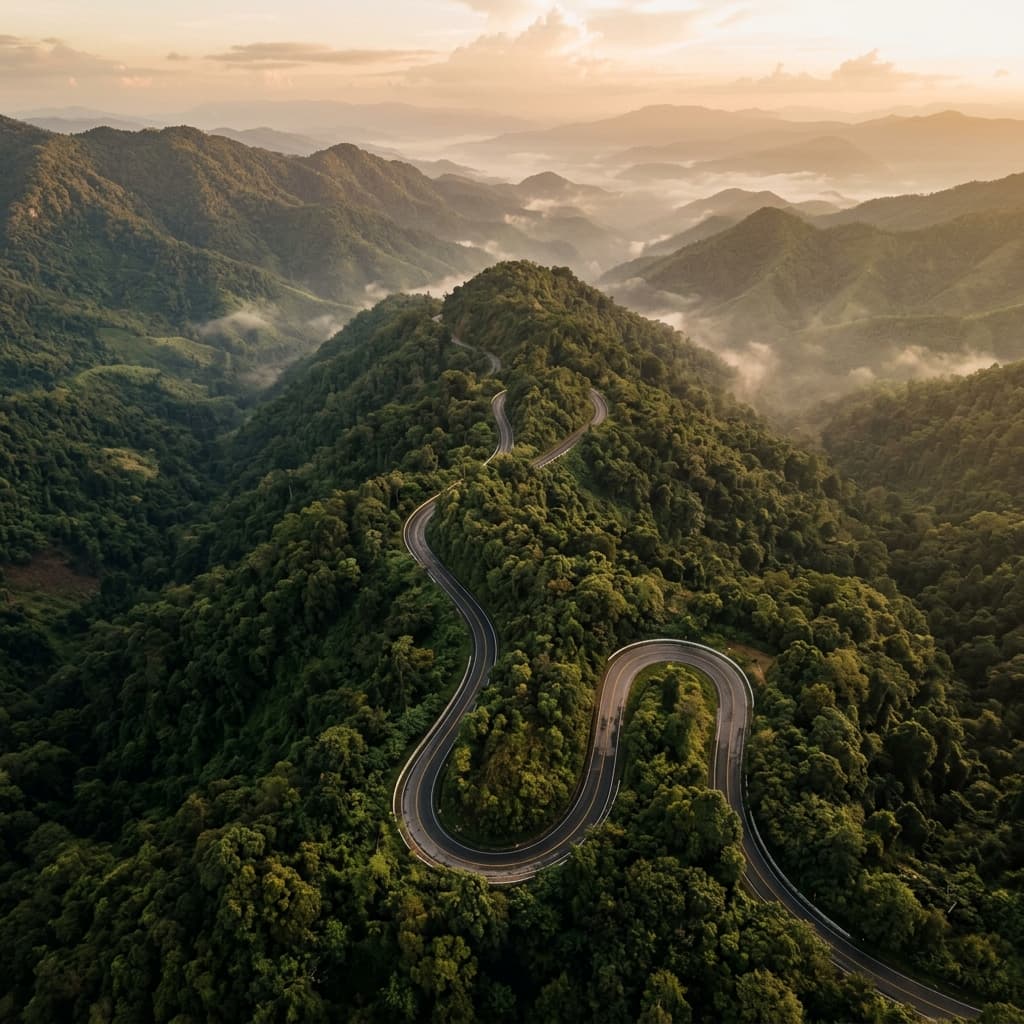
The Mae Hong Son Loop is one of Northern Thailand's best overland journeys. But it is not the right trip for everyone in the same way.
What the Mae Hong Son Loop actually is
The Mae Hong Son Loop usually refers to a circular route through the mountains of Northern Thailand that starts and ends in Chiang Mai. Most travelers connect some version of these places:
| Main Stop | Why People Go |
|---|---|
| Chiang Mai | Starting point, transport hub, bike and car rentals |
| Pai | Relaxed town, cafés, hot springs, canyon views, base for short excursions |
| Pang Mapha / Soppong | Caves, mountain scenery, village stays, quieter feel than Pai |
| Mae Hong Son Town | Lakeside town, temples, slower pace, access to Ban Rak Thai and Pang Ung |
| Optional southern section | More remote scenery, national park detours, fuller loop experience |
In practice, there are two very different trips hidden inside the same name:
- Chiang Mai → Pai → Mae Hong Son → Chiang Mai — the classic fast loop.
- A slower, fuller mountain circuit that includes the southern and western sections such as Mae Sariang, Mae Chaem, or Doi Inthanon.
That distinction matters because many articles talk about the route as if it is one fixed thing. It is not. Your version of the loop should match your time, road confidence, and travel style.
Why the Loop is so popular
The route works because it combines several things that are hard to get in one trip:
- Mountain roads with constant scenery
- Small towns that still feel local
- Enough infrastructure to travel independently
- A mix of iconic and lesser-known stops
- Easy access from Chiang Mai
It also offers flexibility. Some travelers want the thrill of a bike journey. Others want to visit Pai, Ban Rak Thai, Tham Lod Cave, and Mae Hong Son town without touching a scooter. Both are valid.
Is the Mae Hong Loop right for you?
Before thinking about stops, think honestly about fit.
A good fit if you want
- A scenic overland trip, not just one destination
- Mountain landscapes and long road days
- A mix of social places and quiet rural stretches
- Flexible pacing
- Independent travel with local backup
A poor fit if you want
- Smooth, short transfer times
- Zero motion sickness risk
- Urban nightlife every night
- Total spontaneity during peak season without planning
- To learn scooter riding on demanding mountain roads
Best travel styles for the route
| Travel Style | Suitable? | Notes |
|---|---|---|
| Confident motorbike riders | Yes | Classic option, but still safety-sensitive |
| Self-drive car travelers | Yes | Better for comfort, luggage, and weather |
| Non-drivers | Yes | Best with booked rides or staged transfers |
| Families | Yes, selectively | Easier by car with shorter daily distances |
| Nervous mountain-road travelers | Yes, with driver | Strong case for local transport |
| First-time Thailand visitors | Yes | If paced sensibly and not overpacked |
The biggest planning mistake
This is the gap many guides gloss over.
The route is famous, but fame makes it look easier than it feels. The roads are paved and widely used, yes. But the challenge is not usually road quality alone. It is the combination of:
- distance
- curves and elevation
- weather shifts
- fatigue
- mixed driving ability on the road
Local Note
Many independent travelers decide they want the journey, but not the responsibility of self-driving it. That is a smart decision, not a lesser one.
Driving conditions: what beginners need to know
The roads
The main roads are generally paved and navigable, but that does not automatically make them easy. Mountain driving here means:
- Long climbs and descents with frequent blind bends
- Occasional rough patches and roadside gravel
- Wet surfaces in rainy periods
- Reduced visibility in mist or smoke season
The honest safety verdict
If you are already a competent rider and understand mountain roads, the loop can be very rewarding.
If you are not already confident:
- Do not use this route to learn
- Do not assume a scooter is the cheaper choice if an accident or stress ruins the trip
- Do not let social media make risky transport decisions for you
A good local driver is often the better value.
Best time to do the Mae Hong Loop
Season matters more here than many travelers expect. The same route can feel completely different depending on month.
| Period | Conditions | Good For | Watch Out For |
|---|---|---|---|
| Late Nov–Feb | Coolest, driest, clearest | Most travelers, scenic road trips, day trips | Peak demand, cool mornings |
| Mar–Apr | Hot, often smoky in parts of the North | Fast trips if conditions are checked | Heat, haze, reduced views |
| May–Oct | Green season, lush scenery, fewer crowds | Travelers who like quieter, dramatic landscapes | Rain, slippery sections, delays |
| Early Nov | Transition period | Good balance if weather is stable | Conditions vary week to week |
Best overall window
For most people, the most reliable period is late November through February. This is usually best for road visibility, comfort during long transfers, photography, and day trips around Pai and Mae Hong Son.
Rainy season: worth it or not?
Yes, sometimes. But only if you adjust expectations.
The green season can be beautiful, quieter, and more atmospheric. The tradeoff is obvious: roads can be slick, mountain views may disappear into cloud, and daily transport timing needs flexibility.
This is exactly the kind of trip where updated local knowledge matters more than generic internet advice.
How many days you actually need
| Duration | Who It Suits |
|---|---|
| 3 days | Possible, but rushed. Better for travelers who already know what they are doing |
| 4–5 days | A much more realistic minimum if you want stops without constant pressure |
| 6–7 days | The sweet spot for most independent travelers |
| 8+ days | Best if you want the southern arc, Doi Inthanon, village stays, or slow travel |
The 6–7 day version gives you actual time in places instead of turning the entire trip into road recovery.
Motorbike, car, or driver?
| Option | Best For | Pros | Cons |
|---|---|---|---|
| Scooter / motorbike | Experienced riders | Flexible, immersive, classic route feel | Highest fatigue and safety risk |
| Rental car | Couples, families, cautious travelers | More comfortable, better in mixed weather | Still requires mountain driving confidence |
| Private driver | Non-drivers, nervous drivers, independent travelers who want support | Safest and easiest | Less spontaneous unless arranged well |
| Public transport + day trips | Budget travelers | Possible on main corridors | Slower, fragmented, limited remote access |
For many travelers, the real question is not scooter vs car. It is: "Do I want to manage these mountain roads myself at all?"
A practical route framework for first-timers
Option A — Loop Lite
Chiang Mai → Pai → Pang Mapha → Mae Hong Son → Chiang Mai
Good for travelers who want the headline route without the more remote southern extension.
Option B — Slower Full Experience
Chiang Mai → Doi Inthanon / Mae Chaem → Mae Sariang → Mae Hong Son → Pang Mapha → Pai → Chiang Mai
Better if you have time and want a more rounded landscape experience.
Option C — No Self-Drive Hybrid
Chiang Mai to Pai by pre-booked ride → local day trips → transfer to Pang Mapha or Mae Hong Son → day trips with local drivers → return to Chiang Mai
One of the smartest ways to do the route if you want independence without the stress of driving.
The stops worth knowing
Pai
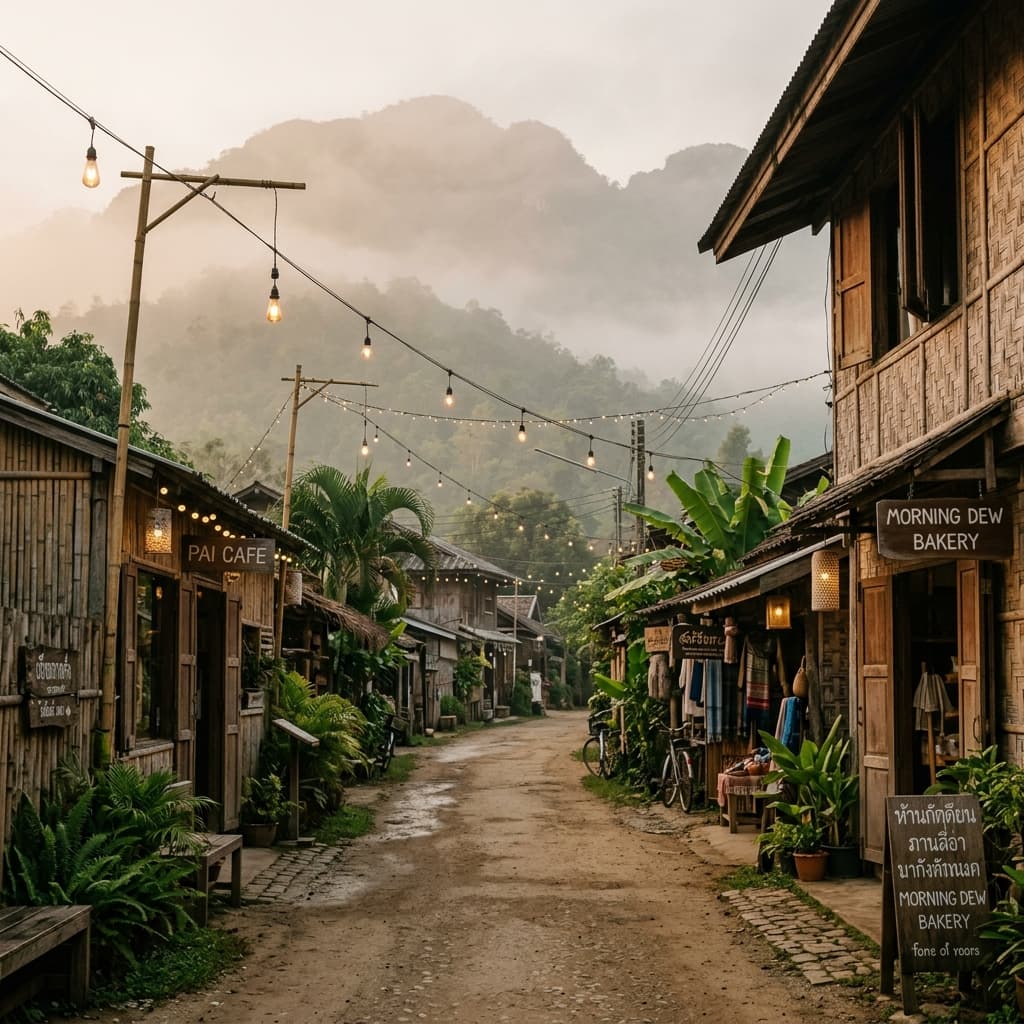
Pai is the most famous stop on the route and often the reason travelers first look into the loop at all.
What to expect: a relaxed, café-heavy town, a social traveler scene, easy access to nearby viewpoints, hot springs, and short drives. For many visitors, Pai works best as a base, not the entire trip.
Pang Mapha / Tham Lod Cave
Tham Lod Cave is one of the strongest stop-and-explore experiences on the route, especially if you want a break from pure driving — a guided cave visit, dramatic formations, and a setting that feels more rural and less polished than Pai.
Pang Mapha is excellent for travelers who want something quieter and more grounded than Pai. A lot of guides mention the cave briefly but skip this more useful point.
Mae Hong Son Town
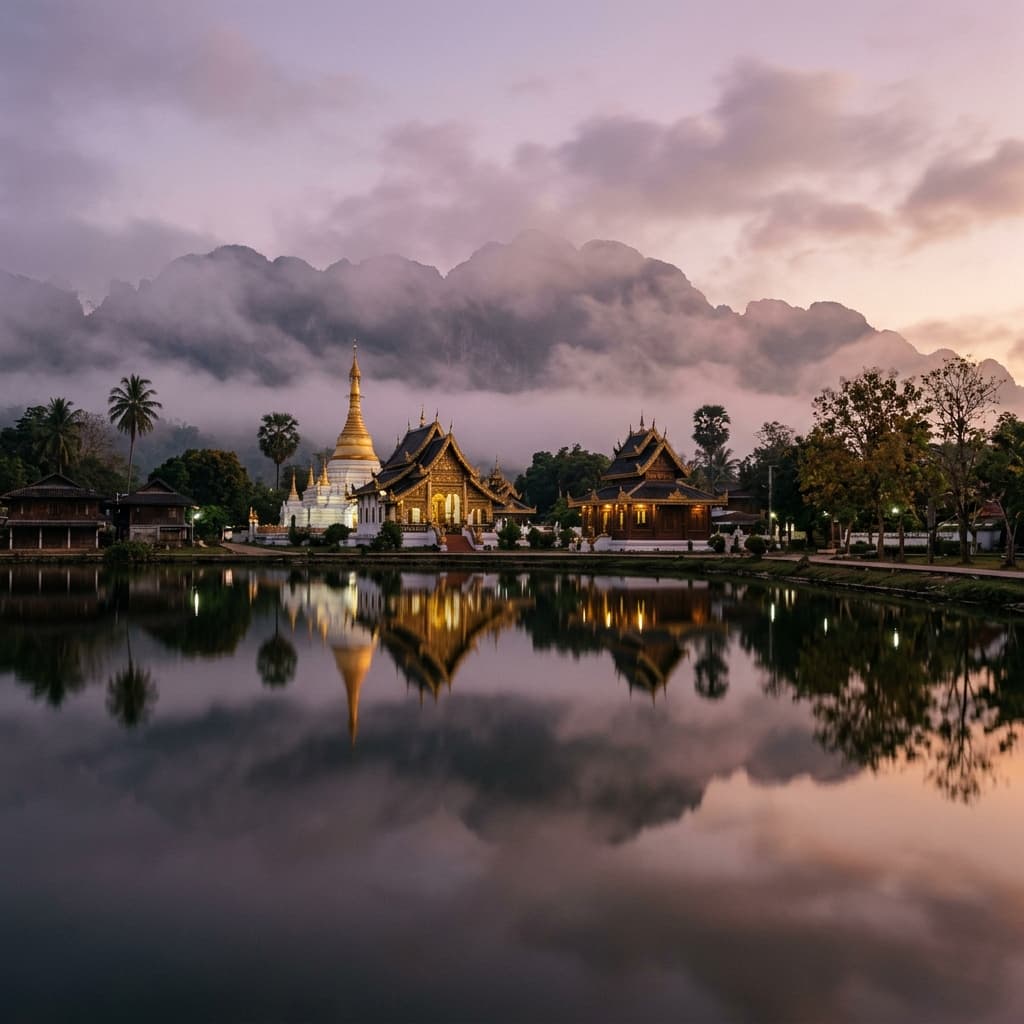
Mae Hong Son town is often overshadowed by Pai in online content, but it is one of the most rewarding bases on the route if you like a quieter pace.
Good for: lakeside evenings, temple viewpoints, day trips to Ban Rak Thai and Pang Ung, and a calmer, more local feeling than Pai.
Ban Rak Thai
A lakeside village with strong Yunnanese-Chinese character, tea culture, and a much cooler, quieter feel than Pai. It is best for an overnight stay, tea terraces and lake views, or a slower day trip from Mae Hong Son town.
This is one of those stops that feels easy in theory and inconvenient in practice without your own vehicle. A vetted driver makes a real difference here.
Pang Ung
Often described as one of the most peaceful spots near Mae Hong Son — a lake, pine forest, and cool morning atmosphere. Best for slow early starts and nature-focused side trips. Pairs naturally with Ban Rak Thai as a day trip or overnight from Mae Hong Son town.
Doi Inthanon
Not always included in shorter loop versions, but a serious contender if you have more time. Thailand's highest mountain area, with cooler temperatures, viewpoints, and trails. Makes the most sense on a fuller loop or as a separate excursion from Chiang Mai.
Sample 6-day beginner-friendly itinerary
| Day | Route | Overnight |
|---|---|---|
| 1 | Chiang Mai to Pai | Pai |
| 2 | Pai local exploration | Pai |
| 3 | Pai to Pang Mapha / Tham Lod area | Pang Mapha or continue |
| 4 | Pang Mapha to Mae Hong Son | Mae Hong Son |
| 5 | Day trip to Ban Rak Thai and/or Pang Ung | Mae Hong Son |
| 6 | Return toward Chiang Mai | Chiang Mai or en route |
What most guides miss
- The loop is not only for riders — many travelers now want the route without self-driving, especially couples, solo travelers, and anyone uneasy on mountain roads.
- Pai is not the whole story — Pang Mapha and Mae Hong Son town are often more rewarding for travelers looking for scenery, quiet, and substance.
- Local support is not a luxury — in mountain regions, weather changes, road fatigue builds, plans shift. Being able to message a real human is far more useful than a bookmark folder full of generic blogs.
Final verdict
The Mae Hong Son Loop is one of Northern Thailand's best journeys, but it is best approached with clear expectations.
Go if you want: mountain scenery, varied small-town stops, a route that rewards patience, a trip that feels more regional than a single-destination vacation.
Think twice before self-driving if: you are not already confident on winding mountain roads, you dislike long transfer days, or you are relying on internet summaries instead of current local information.
The best version of this trip is not the most extreme one. It is the one that matches your confidence, time, and travel style.