The short answer
Yes — Pang Mapha is worth visiting from Pai if you want to explore massive prehistoric caves, see dramatic karst mountain viewpoints, and experience a quieter, more rural side of Northern Thailand. It is a scenic and slow-paced landscape destination, best visited by those who are confident on winding mountain roads or who hire a local driver.
Yes — Pang Mapha is worth visiting from Pai if you want a quieter, more grounded side of the Mae Hong Son Loop. It is not a second Pai, and that is exactly why many travelers end up remembering it. Instead of cafés, nightlife, and easy drop-in attractions, Pang Mapha offers caves, karst mountains, village landscapes, long views, and a slower rhythm that suits people who like space, scenery, and simple days on the road.
For independent travelers, the main question is usually not just “is it worth it?” but also “is it practical, safe, and easy enough from Pai?” That depends on how you travel. The road from Pai to Pang Mapha is beautiful but still a mountain road with bends, changing weather, and limited transport flexibility if you do not ride confidently. If you are comfortable on a scooter and conditions are dry, it can be a very good short ride. If you are unsure about curves, rain, fatigue, or driving standards in Northern Thailand, this is the kind of stretch where a local driver is often the better choice.
Waykeeper helps with exactly that middle ground: travelers who want the freedom of independent travel without having to guess at roads, timing, weather, or transport. As a licensed local operator with human-confirmed bookings, vetted drivers, and direct support on LINE and WhatsApp, Waykeeper is useful when you want Pang Mapha to stay simple rather than stressful.
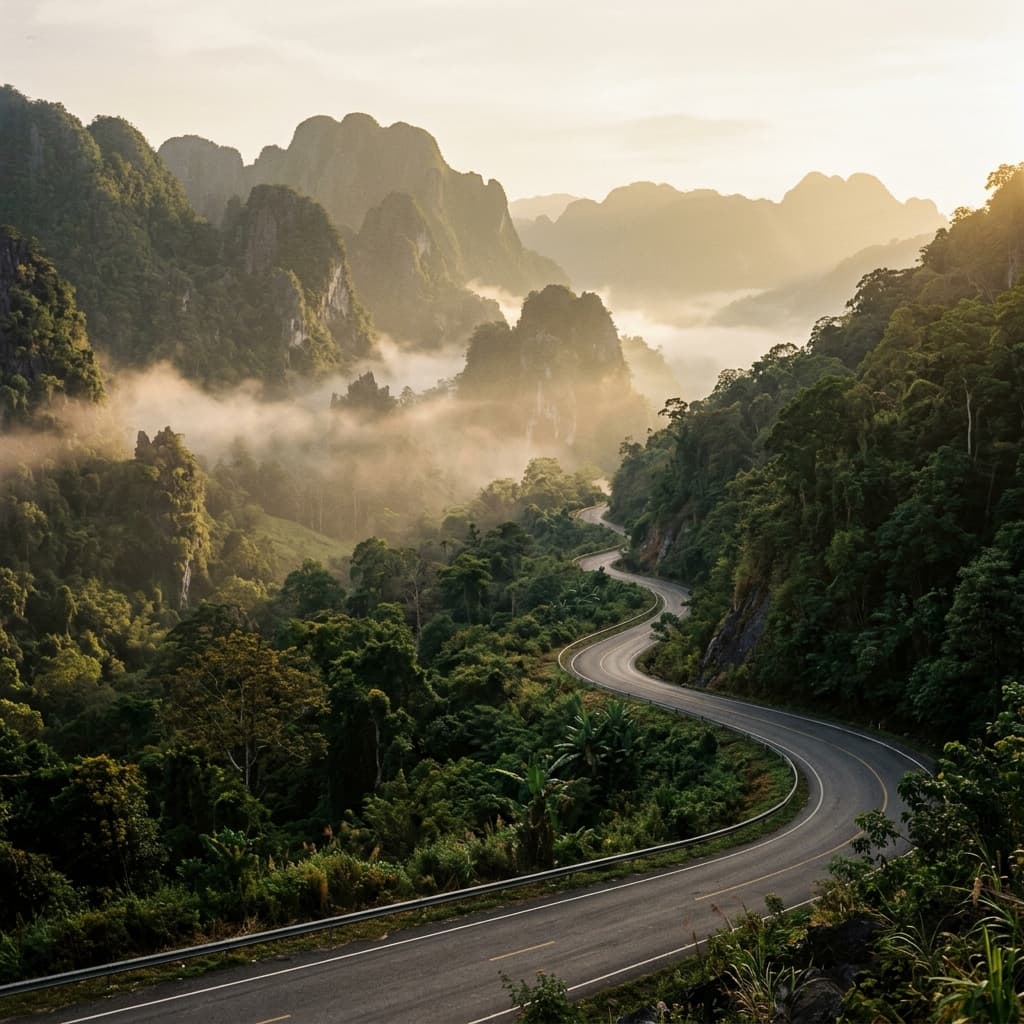
The Short Answer
If you are deciding quickly, this is the honest version:
- Worth visiting: yes, for caves, mountain scenery, village landscapes, and a quieter atmosphere than Pai.
- Best for: independent travelers, photographers, road trippers, nature-focused visitors, and anyone continuing the Mae Hong Son Loop.
- Less ideal for: travelers wanting nightlife, shopping, polished tourist infrastructure, or lots of easy “walk up” attractions.
- Best trip style: half day, full day, or an overnight from Pai.
- Best transport choice: self-drive only if you are genuinely confident on mountain roads; otherwise book a local driver.
Why Pang Mapha Feels Different From Pai
Pai is social, relaxed, and heavily set up for tourism. Pang Mapha is more rural, more spread out, and less curated. That difference matters.
Pai feels easy
Pai gives you:
- Many cafés and restaurants
- Walkable central streets
- Hostels, bars, and casual social life
- Lots of short attractions near town
- An atmosphere designed for staying a few days without much planning
Pang Mapha feels quiet and spacious
Pang Mapha gives you:
- Fewer distractions
- More dramatic karst scenery
- Stronger cave and geology appeal
- Smaller villages and roadside stops
- A slower, less commercial pace
Pang Mapha is where the landscape starts to feel broader and quieter. You notice the road and the mountain shapes more.
If Pai is where many travelers pause, Pang Mapha is where the landscape starts to feel broader and quieter. You notice the road more. You notice the mountain shapes more. You notice how little you need to do to have a good day.
Who Pang Mapha Is For
Pang Mapha is especially good for travelers who want one or more of the following:
- A quieter alternative to another day in Pai
- A meaningful stop on the Mae Hong Son Loop
- Caves and geology rather than cafés and nightlife
- Village scenery and mountain viewpoints
- A day trip that feels less touristic
- A slower pace with fewer decisions
You will probably enjoy Pang Mapha if you are:
| Traveler type | Is Pang Mapha a good fit? | Why |
|---|---|---|
| Nature-focused traveler | Yes | Scenery, karst formations, caves, viewpoints |
| Photographer | Yes | Layered mountains, misty mornings, village ridges |
| Road trip traveler | Yes | One of the most scenic parts of the route |
| Family with older kids | Usually | Good if they enjoy caves and quieter outings |
| Backpacker looking for nightlife | Maybe not | Much less social than Pai |
| First-time Thailand visitor | Depends | Best if you want scenery over convenience |
| Nervous scooter rider | No for self-drive | Better with a local driver |
Who May Not Enjoy It
Pang Mapha is not for everyone, and that is useful to say clearly.
You may not enjoy it much if you:
- Want busy markets, bars, and cafés
- Dislike winding roads
- Prefer attractions with high comfort and low effort
- Are short on time and only want “must-see” highlights
- Expect polished tourism infrastructure everywhere
Some travelers go expecting a hidden second Pai and feel underwhelmed. That is usually the wrong frame. Pang Mapha works better when you treat it as a landscape destination, not an entertainment destination.
What Makes Pang Mapha Worth the Detour
1. The Caves Are the Main Reason Many People Go
The standout is Tham Lod Cave, one of the best-known cave sites in the area. It combines geology, atmosphere, and a sense of place that feels very different from Pai’s more casual stop-in attractions.
Inside and around the Pang Mapha cave systems, the draw is not just beauty. There is also genuine archaeological importance.
"Tham Lod Cave in Pang Mapha District, Mae Hong Son Province, has yielded archaeological evidence of human habitation dating back approximately 20,000 years." — Source
That does not mean every visitor needs to approach it academically. It simply means this is not a decorative tourist cave alone. It has weight and history.
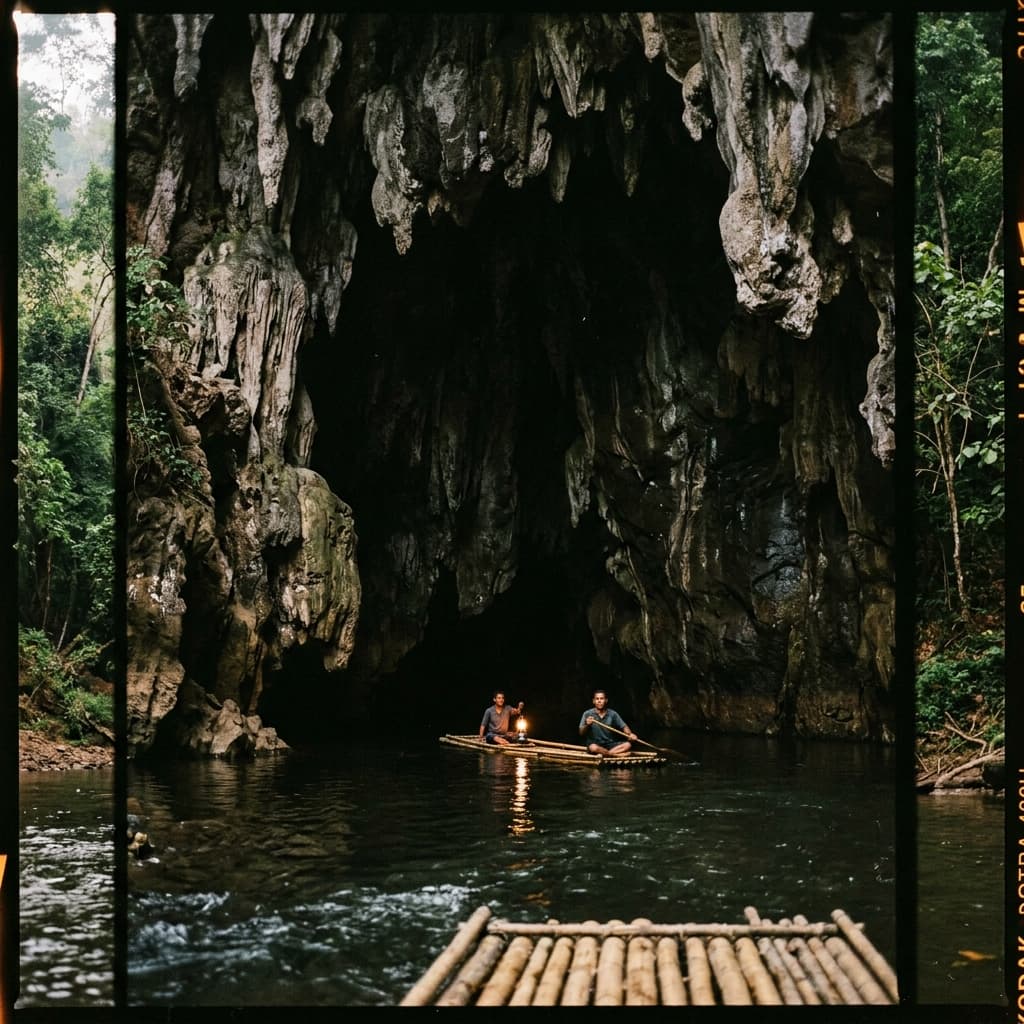
What to expect at Tham Lod Cave
- Limestone formations and massive stalactites
- A river running through the cave system
- Guided access arrangements with local lantern-bearing guides
- A cooler, darker environment than outside
- A stronger sense of scale than many visitors expect
Good to know
- Wear shoes with good grip — cave pathways are uneven and can be slippery
- Bring a light layer if you get cold easily
- Do not rush if you want the atmosphere, not just the checklist
2. The Karst Landscape Is Beautiful in a More Serious Way
Pang Mapha’s mountain scenery is more dramatic than many first-time visitors expect. The limestone ridges, folds in the road, and layered horizons give the area a character that feels distinct from Pai.
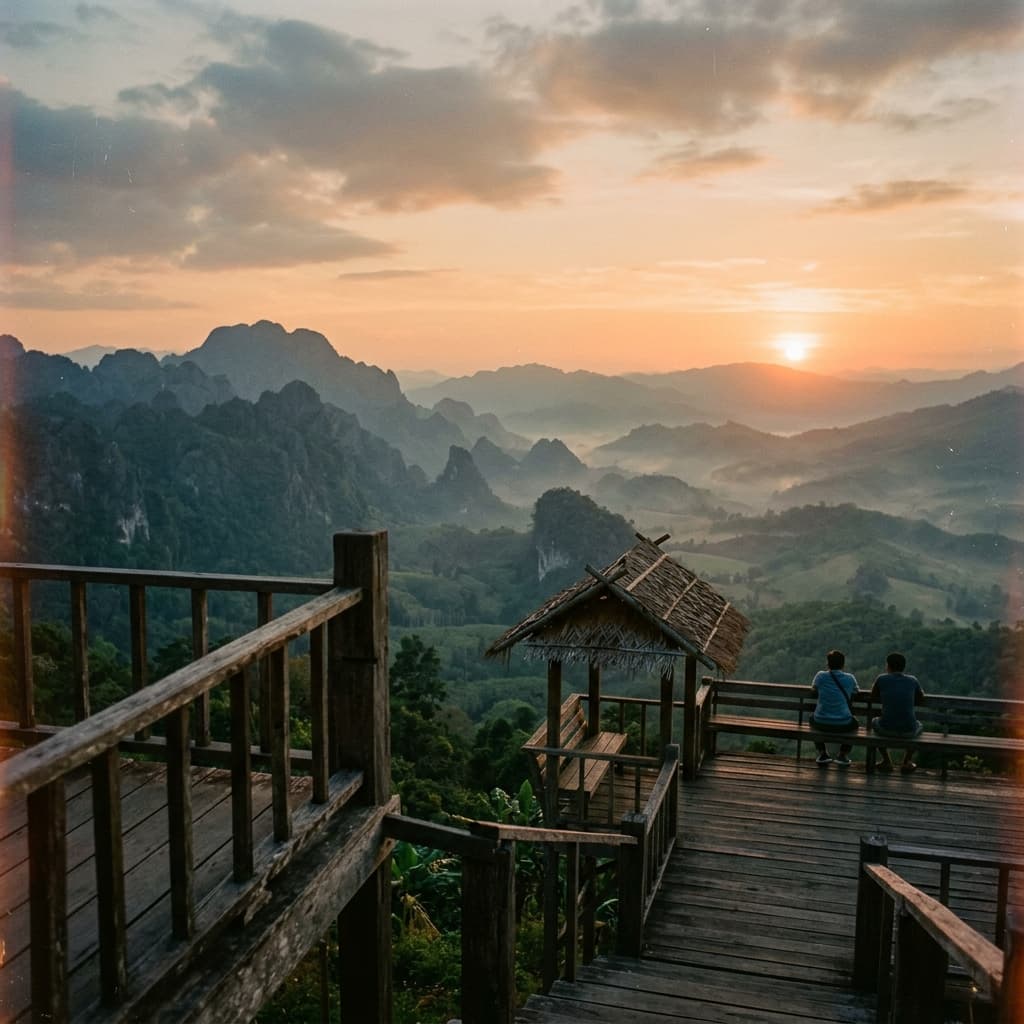
This is the kind of place where a viewpoint stop is actually worth the stop. Late afternoon can be especially good for clearer layers and softer light.
Why the road experience matters here
A lot of the reward is not just “arrival.” It is the movement through the landscape. That is one reason Pang Mapha suits people doing the Mae Hong Son Loop particularly well.
"The Mae Hong Son Loop, a 600-kilometer circuit through Northern Thailand's mountains, features 1,864 cataloged curves between Chiang Mai and Mae Hong Son town." — Source
That same fact is also the reason some travelers should not force themselves to self-drive. Scenic roads are still demanding roads.
3. Villages Add Texture, Not Performance
Part of Pang Mapha’s appeal is that its villages still feel like lived places rather than attractions built for a fast tourist pass-through. You may stop for views, simple food, coffee, or just the atmosphere of ridge settlements and mountain farming areas.
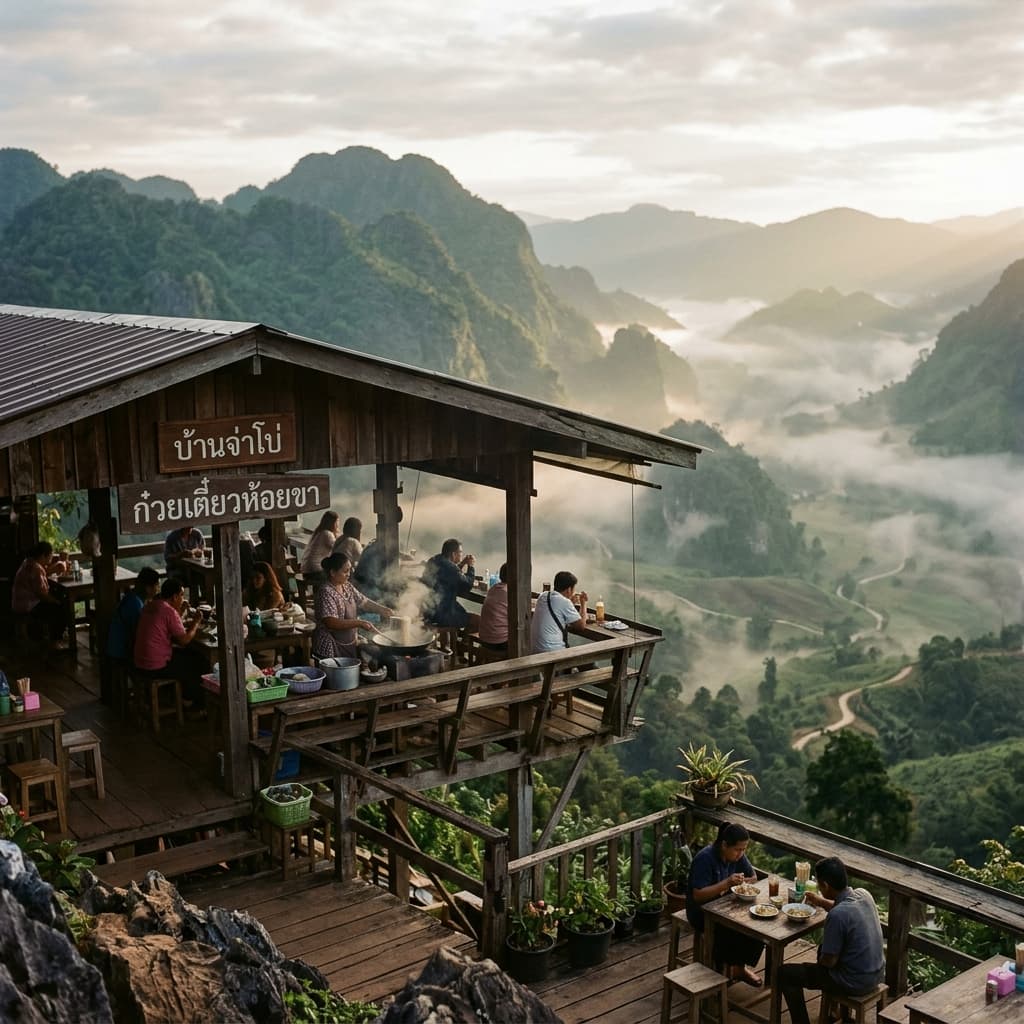
This does not mean you should treat villages like a staged cultural product. It means the region still has a sense of real daily life that many visitors find refreshing after more developed stops.
A useful mindset
Go to villages for:
- Ridge views and mountain scenery
- Simple local food and coffee
- A sense of mountain road atmosphere
- Respecting the local way of life
Do not go expecting:
- Styled entertainment or performances
- Polished visitor centers
- Endless curated activities
4. It Gives You a Better Sense of the Mae Hong Son Loop
If you only stay in Pai, you get one version of Northern Thailand. If you continue into Pang Mapha, even as a day trip, you begin to understand the region more fully. The road becomes less about a town and more about a landscape system: valleys, caves, ridges, villages, and transitions.
For many travelers, this is where the Mae Hong Son Loop starts to feel like a real journey instead of a sequence of Instagram stops.
Day Trip or Overnight?
Both can work. The better choice depends on your pace.
Option 1: Day trip from Pai
Best for:
-
Travelers with limited time
-
Those mainly interested in Tham Lod Cave and key viewpoints
-
People who want to return to Pai for the night
-
Pros: Simple, efficient, and fits easily if you are already based in Pai.
-
Cons: Can feel rushed if you stop often; less room for weather changes; less time to enjoy the slower evening rhythm.
Option 2: Overnight in Pang Mapha or Soppong
Best for:
-
Loop travelers continuing onward toward Mae Hong Son
-
Photographers chasing morning mist and golden light
-
People who like quiet, starry nights
-
Travelers who want to visit cave and village areas without hurrying
-
Pros: Calmer pace, better for dawn or late afternoon light, and eliminates backtracking.
-
Cons: Fewer accommodation choices than Pai, very quiet evenings, and needs a bit more planning.
How Long Do You Need?
Here is a practical guide to planning your time:
| Trip style | Suggested time | Notes |
|---|---|---|
| Quick stop from Pai | 4–6 hours | Enough for road views and one main cave stop |
| Relaxed day trip | 6–8 hours | Better if you want a cave, viewpoint, meal, and village stop |
| Overnight | 1 night | Best balance for slow travel and morning mist |
| Loop continuation | 1–2 days | Works well if heading onward toward Mae Hong Son |
Road Reality: What the Drive Is Actually Like
This is the part many articles gloss over. The route is scenic, but it is still a mountain route.
What to expect on the road from Pai to Pang Mapha
- Repeated curves and switchbacks
- Significant elevation changes
- Some steep and narrow stretches
- Occasional reduced visibility in rain or morning mist
- Local traffic patterns (trucks, agricultural vehicles) that require caution
The road is not extreme by Northern Thailand standards, but it is not a casual learner route either.
- Self-drive is reasonable if: You already ride scooters or motorcycles confidently, are used to mountain curves, the weather is dry, and you do not feel rushed.
- A local driver is better if: You are nervous on steep bends, traveling during the green/rainy season, want to look at the scenery instead of managing the road, or are traveling with family and luggage.
Local Note
Choosing to hire a local driver in Northern Thailand is a smart safety decision, not a compromise on adventure. It lets you focus on the landscape rather than the road stress.
Best Time to Visit Pang Mapha From Pai
Cool season: roughly November to February
Usually the most comfortable for road trips and viewpoints. Mornings can be cold, especially on a scooter.
Hot season: roughly March to May
Roads are dry and access is straightforward, but afternoons can feel harsh. Haze and smoke from agricultural burning can affect mountain views.
Green season: roughly June to October
Beautiful, green landscapes and far fewer people. However, you must expect rain, slippery road sections, mud near cave sites, and possible cave closures if water levels rise.
Honest timing advice:
- Best for easy travel: Cool season (November to February)
- Best for lush scenery: Rainy season (if you are not driving nervously)
- Least comfortable: Hot season afternoons (March to May)
Safety and Comfort Tips
For scooter riders
- Avoid starting too early in winter months when roads are wet and cold.
- Do not ride after dark unless absolutely necessary.
- Wear more layers than you think you need — the wind on mountain ridges is chilly.
- Fuel up in Pai before starting; gas stations are sparse on the mountain.
- Do not force your pace to match more experienced riders.
For everyone
- Carry plenty of water and sun protection.
- Expect patchy mobile signal in deeper valleys.
- Keep cash on hand for small local stops, entry fees, and noodle shops.
- Build in time buffers for sudden weather changes.
When Waykeeper Makes the Trip Better
Waykeeper is most helpful for travelers who want to remain independent but want local support in the parts that matter.
That includes:
- Arranging vetted local drivers for mountain-road transfers and day trips.
- Helping with Pai, Pang Mapha, Mae Hong Son, and Chiang Mai coverage in one cohesive trip.
- Sharing practical route suggestions based on current weather and road conditions.
- Offering human-confirmed bookings with local operators.
- Staying reachable by LINE and WhatsApp for real-time questions.
- Giving honest advice when a route, activity, or same-day plan is not recommended.
Good local support is not just booking transport. It is helping you make the right decisions without the hard-sell.
Final Verdict
Yes, Pang Mapha is worth visiting from Pai for the right traveler.
- Go if you want: Prehistoric caves, karst mountain scenery, a quieter road day, and a more spacious, less commercial Northern Thailand experience.
- Skip it (or keep expectations modest) if you want: Nightlife, trendy cafés, easy entertainment, or a destination that works without mountain road awareness.
The best way to think about Pang Mapha is this: it is not better than Pai, and it is not worse. It is simply slower, quieter, and more landscape-led. For many people on the Mae Hong Son Loop, that makes it one of the most worthwhile stretches of the journey.
Want to visit Pang Mapha without the logistics stress? Ask our local team about road conditions, transport, or matching a driver to your route.
FAQ
Is Pai more expensive than Chiang Mai?
Usually, Pai is slightly more expensive than Chiang Mai for accommodation, tourist cafés, and transport options in peak season due to its smaller market.
Where to go in Thailand off the beaten path?
Pang Mapha is an excellent option if you want a quieter side of Northern Thailand with caves, karst mountains, and village scenery, feeling far less commercial than Pai.
How many days should I spend in Pai?
For most travelers, 2 to 4 days in Pai is enough to enjoy the town and nearby sights. Add an extra day if you plan to do a relaxed day trip to Pang Mapha.
What to do around Pai?
Around Pai, you can visit Pang Mapha, explore Tham Lod Cave, stop at mountain viewpoints, relax at hot springs, or continue along the Mae Hong Son Loop.
Is Pai colder than Chiang Mai?
Yes, Pai is often cooler than Chiang Mai, especially early in the morning and during the cool season. Ridge roads toward Pang Mapha can feel quite chilly.
Is it illegal to go braless in Thailand?
No specific law focuses on that alone, but Thailand is culturally modest. In villages, temples, and rural areas like Pang Mapha, dressing respectfully is the expected norm.